Enzyme Program for Rendering Meal Digestibility
Rendering meal value is won in the process, not just at the loadout scale. Rendara supplies enzyme programs built for rendering plant hydrolysis where operators need tighter control over protein breakdown, feather meal digestibility, hydrolysate viscosity, odor load, and downstream separation.
As an enzyme supplier for rendering plant hydrolysis, Rendara helps plants tune proteolytic and keratin-targeted enzyme systems around real operating goals: more consistent digestibility, cleaner protein liquors, improved handling behavior, and more predictable animal byproduct meal quality.
Request a quote
Built for rendering conditions, not lab brochures
Rendering plants do not run on ideal feedstock. Incoming material shifts by species mix, age, fat load, feather content, temperature history, grinding quality, and hold time. That variability shows up fast in hydrolysis tanks, cookers, decanters, dryers, and final meal specs.
Rendara enzyme programs are selected to help plants manage those swings with practical control points:
- Protein breakdown profile
- Feather and keratin-rich fraction digestibility
- Hydrolysate flow behavior
- Viscosity reduction before separation or drying
- Fat-water-solids separation clarity
- Odor load tied to uncontrolled degradation
- Meal consistency across variable raw material
- Dryer loading and downstream handling stability
Where the enzyme program fits in the plant
Feather meal and keratin-rich streams
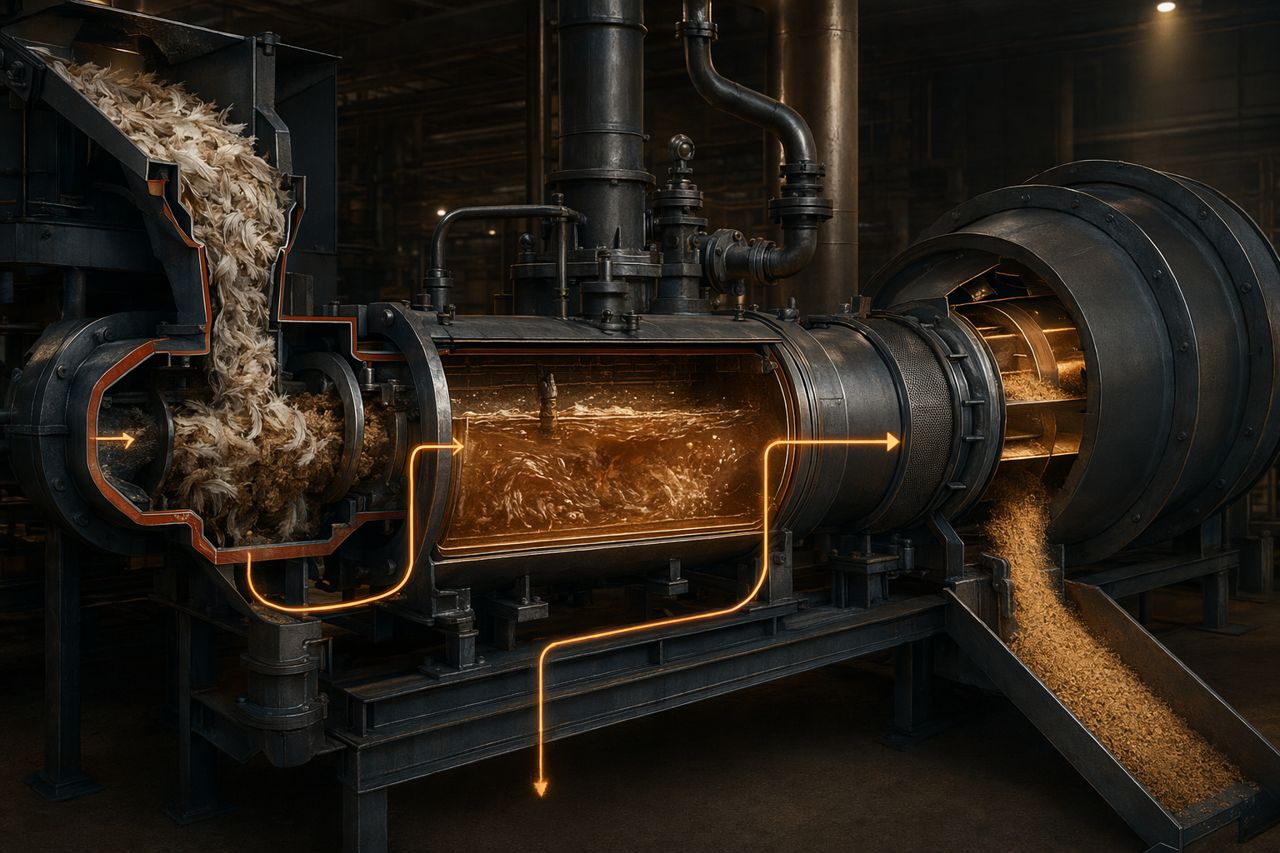
Feather material is structurally tough. Heat and pressure can open the substrate, but enzyme selection helps drive more controlled hydrolysis after mechanical and thermal preparation. Rendara focuses on enzyme systems that support digestibility improvement without pushing the process into over-liquefaction or unstable slurry behavior.
Operational targets may include:
- More uniform feather hydrolysate texture
- Reduced coarse undigested fraction
- Better consistency in digestibility-related meal quality
- Controlled viscosity before drying
- Smoother transfer through pumps, lines, and tanks
Poultry, mixed animal, and byproduct protein meals
Mixed rendering streams can produce inconsistent protein liquors and variable meal performance. A targeted enzyme program helps reduce process drift by improving hydrolysis control across shifting byproduct compositions.
Rendara works with plants targeting:
- More predictable protein solubilization
- Better batch-to-batch meal uniformity
- Cleaner separation behavior in fat, water, and solids phases
- Reduced rework caused by incomplete digestion
- More stable cooker and dryer feed behavior
Hydrolysate viscosity and separation control
High-viscosity hydrolysate can slow transfer, interfere with heat movement, burden decanters, and reduce clean phase separation. Enzyme selection can help change slurry behavior before those bottlenecks compound.
The objective is not simply to break material down. The objective is to break it down in the right window so the plant can move, separate, dry, and recover value with fewer surprises.
What Rendara evaluates before recommending an enzyme program
Rendara does not start with a generic enzyme label. We start with the rendering line and the commercial target.
Typical review points include:
- Raw material mix and variability
- Feather, bone, blood, soft tissue, or mixed byproduct load
- Grind profile and pre-cook preparation
- Hydrolysis vessel configuration
- Thermal exposure and hold profile
- Slurry viscosity and transfer limits
- Separation equipment and performance constraints
- Dryer capacity pressure
- Target meal quality range
- Current failure modes: coarse fraction, odor load, inconsistent digestibility, poor flow, or unstable separation
From there, Rendara recommends an enzyme direction that fits the plant’s operating envelope and quote volume.
Program goals for plant managers
1. Increase useful protein conversion
Better hydrolysis control can help convert more of the available protein fraction into a usable, consistent meal pathway. For feather and keratin-rich materials, the focus is digestibility-related improvement without losing control of slurry handling.
2. Reduce process drag from viscosity
When hydrolysate thickens, everything downstream feels it: pumps, tanks, exchangers, decanters, dryers, and cleanup. Rendara enzyme programs are designed with viscosity behavior in mind so the hydrolysis step supports throughput instead of creating a bottleneck.
3. Improve fat-water-solids separation
Clean separation protects yield recovery. Poorly controlled protein breakdown can carry solids into the wrong phase, hold fat in emulsion, and increase load on downstream equipment. Rendara helps tune enzyme selection for cleaner phase behavior where the process allows.
4. Support more predictable meal quality
Digestibility-related meal performance depends on more than the enzyme. It also depends on raw material, thermal history, process control, and drying. Rendara’s role is to supply an enzyme program that helps narrow variability instead of adding another unknown.
5. Control odor load at the process level
Odor issues often track back to process delay, uncontrolled degradation, hot wet residues, and inconsistent hydrolysis. A controlled enzyme program can support faster, more predictable processing windows, helping reduce odor pressure tied to unstable material handling.
Enzyme supply matched to your rendering operation
Rendara supports B2B buyers who need dependable enzyme supply, practical technical discussion, and quote clarity. We can support programs for:
- Feather meal digestibility improvement
- Poultry byproduct meal hydrolysis
- Mixed animal byproduct protein processing
- Hydrolyzed protein production
- Rendering wastewater and protein-rich side stream treatment where applicable
- Process trials for viscosity, separation, and meal consistency targets
What to include in your quote request
To recommend the right program, send the practical plant details your team already tracks:
- Material type and approximate daily throughput
- Current hydrolysis or cooking step description
- Main operating problem: digestibility, viscosity, odor load, separation, yield recovery, or consistency
- Current enzyme use, if any
- Target application: feather meal, poultry meal, mixed byproduct meal, hydrolysate, or side stream
- Packaging preference and expected order volume
- Location and delivery requirements
Why rendering plants choose Rendara
- Direct enzyme sourcing for industrial hydrolysis applications
- Plant-floor discussion focused on throughput and separation, not vague claims
- Enzyme selection tied to feedstock variability and real constraints
- Quote process built for production buyers and technical managers
- Program thinking for digestibility, viscosity, odor load, and yield recovery
Request a quote
If your plant needs an enzyme program for rendering meal digestibility, Rendara can help define the right supply direction.
Use the on-site form below to request a quote. Include your stream type, process target, and volume range, and our team will respond with the next step.
Request a quote for Rendara rendering hydrolysis enzymes.