Procurement Checklist for Rendering Plant Processing Aids and Consumables
Rendering plant consumables are not minor purchases. A drum, tote, liner, antifoam, cleaner, pH adjuster, or hydrolysis enzyme can change throughput, viscosity, fat recovery, solids carryover, wastewater load, odor intensity, and the amount of time your crew spends fighting unstable process behavior.
For plants evaluating an enzyme supplier for rendering plant hydrolysis, procurement should not be a catalog exercise. The right checklist connects purchasing decisions to measurable operating outcomes: cleaner separation, tighter hydrolysis control, better yield recovery, fewer upset conditions, and practical uptime protection.
Start with the operating target, not the product name
Before comparing suppliers, define what the plant needs the consumable to do.
Common rendering targets include:
- Lower hydrolysate viscosity before transfer or separation
- More consistent protein breakdown across variable raw material lots
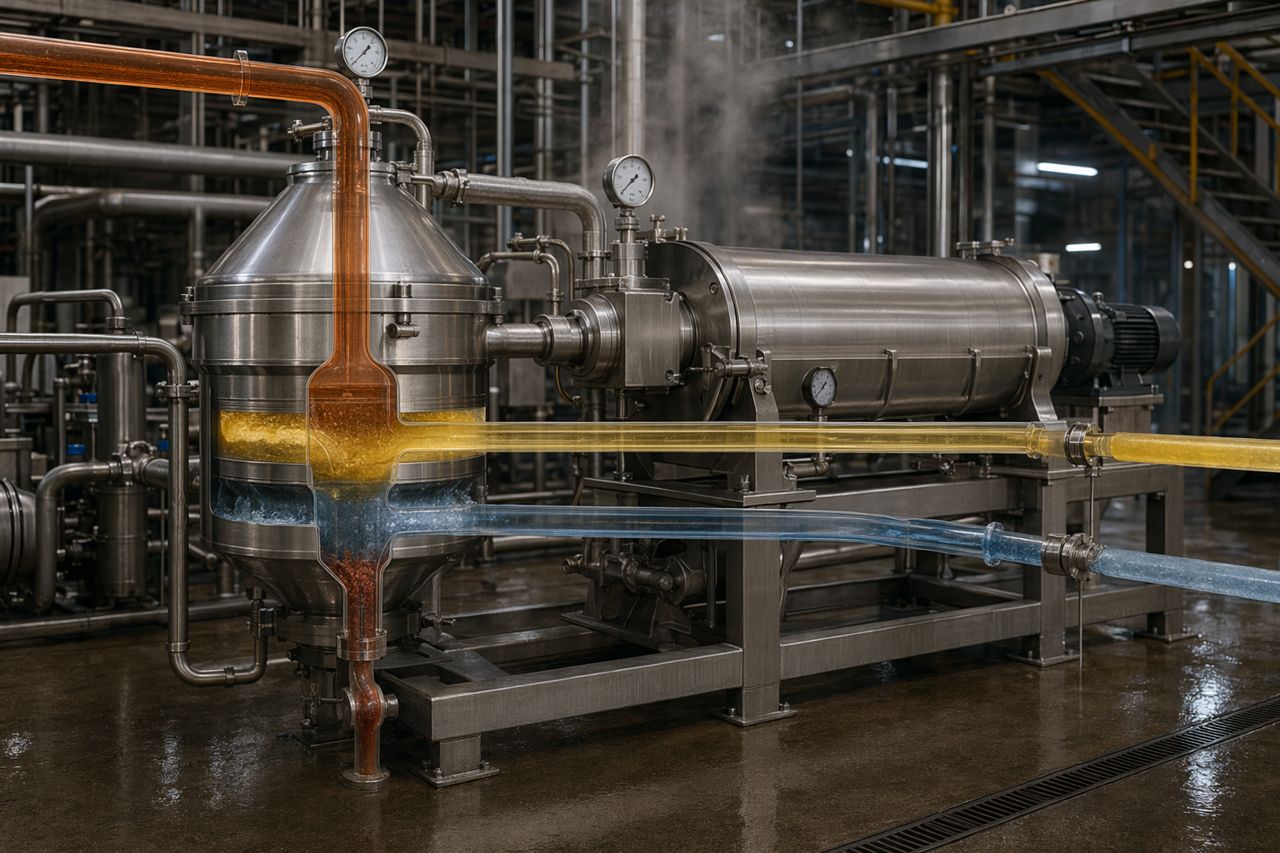
- Cleaner fat-water-solids split at the decanter or separator
- Reduced solids carryover into liquid streams
- Improved fat recovery from high-protein or high-collagen inputs
- Lower odor load from uncontrolled breakdown or held material
- Shorter cleanout time caused by sticky deposits or unstable flow
- More repeatable batch behavior between shifts
- Reduced operator intervention during high-load runs
A procurement decision should be tied to one or two primary operating targets. If every problem is listed as the goal, the trial will be difficult to measure and easy to misread.
Map the consumable to your rendering line
A processing aid that works in one rendering plant may underperform in another because the process window is different. Your checklist should capture the conditions that actually exist on your floor.
Process fit questions
- What raw material mix is being processed: poultry, pork, beef, fish, mixed byproduct, feathers, blood, or offal-heavy streams?
- Is the process batch, continuous, or semi-continuous?
- Where is hydrolysis taking place: pre-cooker, post-cooker, dedicated tank, recirculation loop, or holding vessel?
- What temperature profile does the material see before, during, and after addition?
- How long does the product remain in the target process window?
- Is the stream pumpable at the intended addition point?
- Does the plant need viscosity reduction, protein solubilization, separation improvement, or all three?
- What equipment limits the line today: grinder, cooker, tank agitation, pump, decanter, separator, dryer, or wastewater system?
This prevents a common procurement failure: buying a technically sound product that does not match the plant’s actual residence time, thermal exposure, or mechanical setup.
Evaluate supplier support like an operating risk control
For rendering hydrolysis, supplier support matters because the plant environment is variable. Incoming material changes by species, freshness, fat level, bone level, moisture, and hold time. A supplier should help convert that variability into a controlled trial plan.
What to look for in a supplier
- Experience with rendering hydrolysis, not only general food or feed processing
- Ability to discuss viscosity, separation, yield recovery, odor load, and uptime in plant terms
- Practical dosing-point recommendations based on equipment layout
- Trial support built around observable process outcomes
- Clear handling, storage, and shelf-life guidance
- Packaging options that fit the plant’s chemical handling system
- Backup supply planning for seasonal peaks or high-volume production
- Documentation that purchasing, QA, and operations can all use
The best supplier conversations should sound like production troubleshooting, not a brochure readout.
Build a purchasing checklist that operations can sign off
Procurement owns cost control. Operations owns uptime. Maintenance owns equipment reliability. QA owns documentation and downstream quality. The checklist should let all groups sign off before the plant commits.
Commercial and logistics checks
- Available packaging sizes and handling requirements
- Lead time for routine orders and emergency replenishment
- Minimum order quantities and storage constraints
- Lot traceability and documentation availability
- Shelf-life expectations under plant storage conditions
- Compatibility with existing tote, pump, or metering setups
- Safety documentation and receiving requirements
- Supplier responsiveness during trial and scale-up
Operational checks
- Target process point for addition
- Expected effect on viscosity, flow, separation, or yield recovery
- Expected operator actions during startup, steady-state, and shutdown
- Impact on cleaning frequency or deposit formation
- Any temperature or pH limits that affect performance
- Impact on downstream decanter, separator, dryer, evaporator, or wastewater load
- Control limits that tell the shift when the process is drifting
Financial checks
- Cost per production run, not only purchase price
- Expected value from recovered fat, recovered protein, reduced downtime, or lower rework
- Labor impact from easier pumping, cleaner separation, or shorter cleanout
- Wastewater and odor management impact where measurable
- Risk cost of poor supply reliability
A low purchase price can become expensive if it increases solids carryover, creates inconsistent flow, or forces extra cleanout time.
Trial design: keep it tight and plant-floor practical
A rendering trial should be structured enough to compare outcomes but simple enough to run during real production.
Set a narrow trial objective
Examples:
- Reduce viscosity before decanter feed
- Improve fat separation from a high-protein stream
- Stabilize hydrolysis behavior during variable raw input days
- Reduce sticky deposits in transfer lines
- Improve pumpability in a heated holding step
Define what the crew will observe
Plant-floor observations may include:
- Pump load and transfer behavior
- Tank turnover and mixing consistency
- Decanter feed stability
- Fat layer clarity and solids drag
- Stickiness or buildup during cleanout
- Odor intensity around hydrolysis or holding areas
- Dryer load behavior if upstream separation changes
- Shift-to-shift repeatability
The trial should also define what not to change. If raw material mix, temperature, hold time, and separation settings all move at once, the plant will not know what caused the result.
Enzyme-specific procurement checks for rendering hydrolysis
When purchasing enzyme solutions for rendering hydrolysis, the focus should be controlled breakdown under real process conditions.
Ask these questions:
- Does the enzyme solution match the protein and collagen profile of the feedstock?
- Can it perform within the plant’s real thermal and residence-time window?
- Is the target lower viscosity, improved separation, higher yield recovery, or process consistency?
- Where should it be added to avoid wasted contact time or thermal overexposure?
- Does the supplier provide practical guidance for trial boundaries and process observations?
- How should the product be stored near a hot, wet, industrial production area?
- What packaging format reduces handling time and spill risk?
- What supply plan protects the plant during peak raw material periods?
For rendering plants, enzymes should be evaluated as operating tools. They need to earn their place by improving flow, control, separation, or recovery in the production line.
Red flags during procurement
Watch for signs that a consumable may create operating risk:
- Supplier cannot explain where the product fits in the rendering process
- Recommendations ignore your temperature profile or residence time
- Performance claims are not tied to measurable plant outcomes
- Trial plan relies on changing too many variables at once
- Packaging does not match your storage or dosing setup
- Lead time is too fragile for production planning
- Documentation is incomplete or slow to arrive
- Price is emphasized while uptime, separation, and yield impact are ignored
In a rendering plant, a consumable is only cheap if it supports the line.
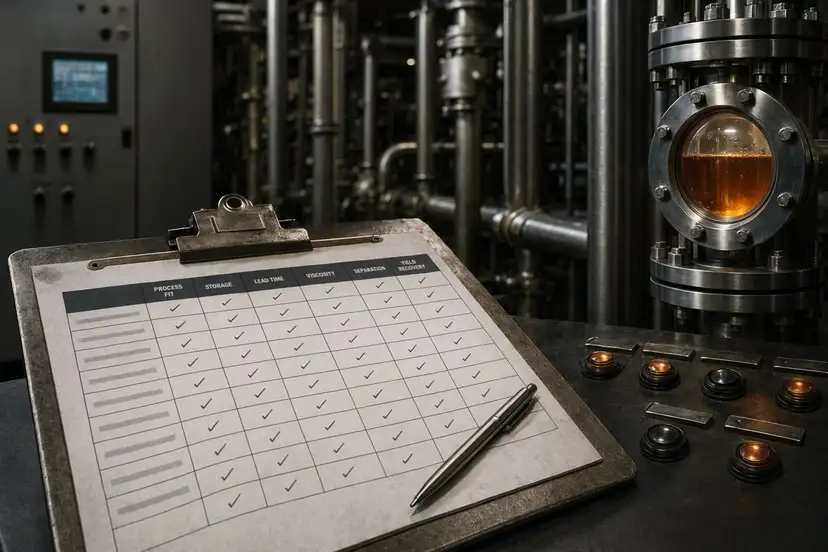
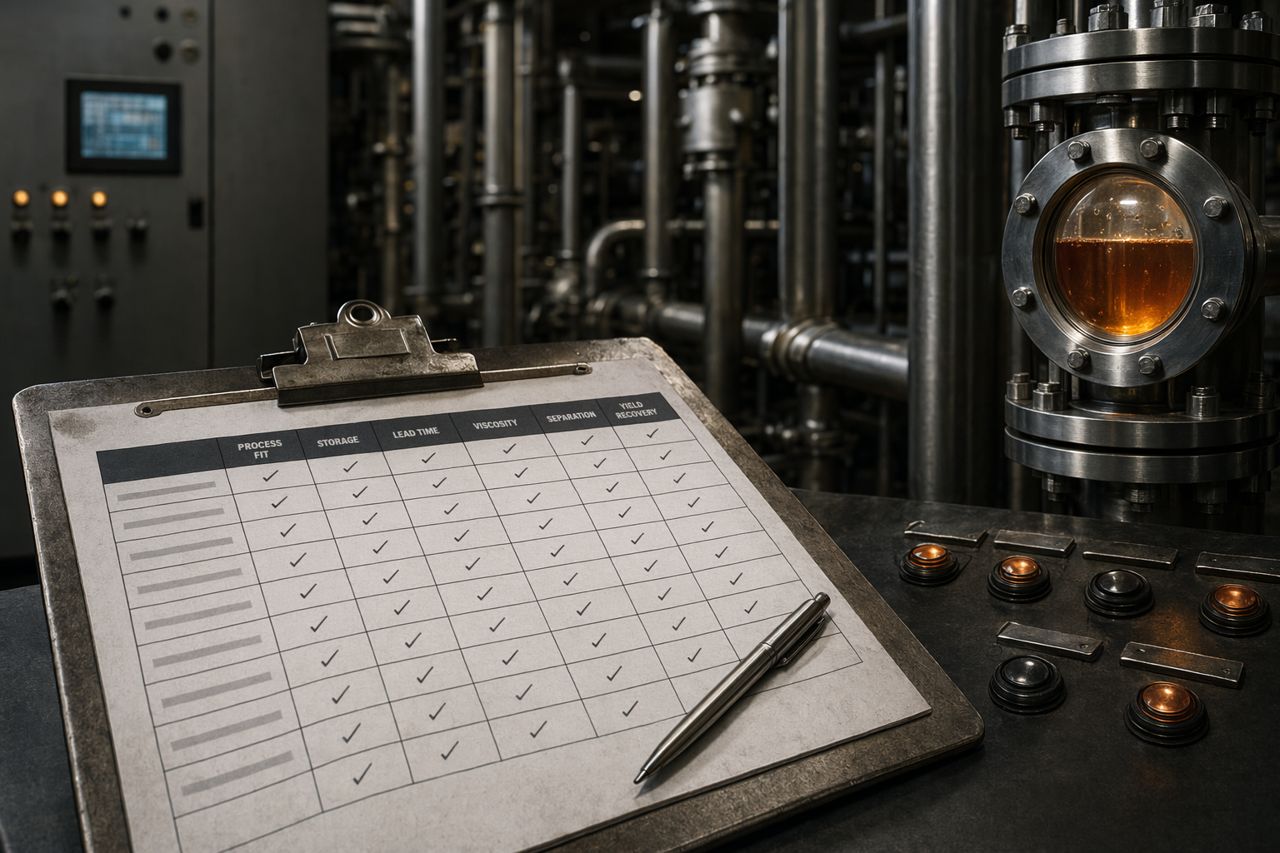
A practical procurement scorecard
Use a simple scoring format before approving a new processing aid or consumable.
| Area |
What to score |
Why it matters |
| Process fit |
Raw material, temperature, residence time, equipment layout |
Prevents mismatch with real plant conditions |
| Performance target |
Viscosity, hydrolysis control, separation, yield recovery, odor load |
Keeps the trial focused |
| Handling |
Packaging, storage, dosing setup, safety documentation |
Reduces crew burden and receiving friction |
| Supply reliability |
Lead time, backup inventory, seasonal availability |
Protects uptime |
| Trial support |
Plant-floor guidance, observation plan, scale-up support |
Improves decision quality |
| Economic value |
Yield recovery, downtime reduction, labor impact, rework reduction |
Looks beyond purchase price |
Where Rendara fits
Rendara supplies enzyme solutions for rendering plant hydrolysis with a focus on controlled breakdown, clean separation, flow behavior, and practical production outcomes. We work with rendering teams that need more than a generic product recommendation. The goal is to match enzyme selection and trial planning to the plant’s raw material mix, thermal profile, equipment limits, and recovery targets.
If your plant is reviewing processing aids, building a new consumables list, or preparing a hydrolysis trial, Rendara can help scope the right enzyme approach for your operating window.
Request a quote
Send your process notes, raw material type, target outcome, and current bottleneck through the on-site request a quote form. Rendara will review the application and help identify the best-fit enzyme solution for your rendering line.
Request a quote