Odor, Residence Time and Process Control in Animal Byproduct Rendering
Rendering plants do not lose control all at once. The warning signs show up in the same places every week: stronger odor at receiving and cookout, thicker liquor through transfer lines, unstable hydrolysis, overloaded decanters, poor fat-water-solids separation, and operators compensating with more heat, longer hold, or slower feed.
For plants evaluating an enzyme supplier for rendering plant hydrolysis, the real question is not whether enzymes can break down byproduct protein. The question is whether the enzyme system can fit the plant’s process window without creating new bottlenecks.
Rendara supplies enzyme solutions for rendering operations that need controlled hydrolysis, cleaner flow behavior, and better recovery from animal byproduct streams. The target is practical: improve conversion where it pays, reduce avoidable odor load, and keep throughput moving.
Why odor often starts as a process-control problem
Odor in rendering is commonly treated as an air-handling issue. Scrubbers, condensers, oxidizers, ductwork, and negative pressure all matter. But the process side often decides how hard those systems must work.
Odor load can rise when raw material sits too long, when cookers are pushed beyond stable loading, when protein breakdown becomes uneven, or when partially hydrolyzed material holds in dead zones. Once the process stream becomes inconsistent, the plant may see more vapor load, more sticky deposits, and more volatile compounds moving into the air system.
Enzymatic hydrolysis is not a deodorizer. Used correctly, it is a process-control tool. By driving protein breakdown in a managed window, the plant can reduce overprocessing, limit uncontrolled degradation, and move toward a more predictable hydrolysate profile.
Operational signals worth watching
Plant teams should connect odor complaints and air-system load with process indicators such as:
- Feedstock age and variability at receiving
- Grinder consistency and particle size distribution
- Cooker load swings and heat transfer stability
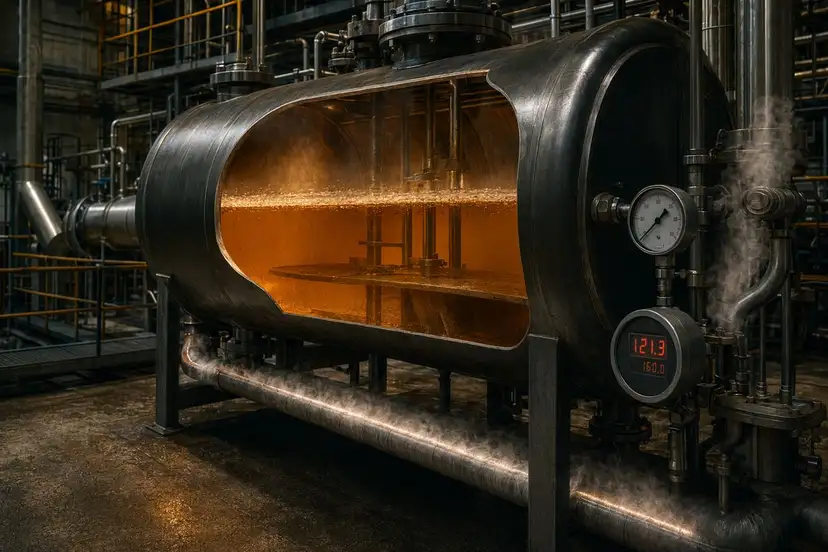
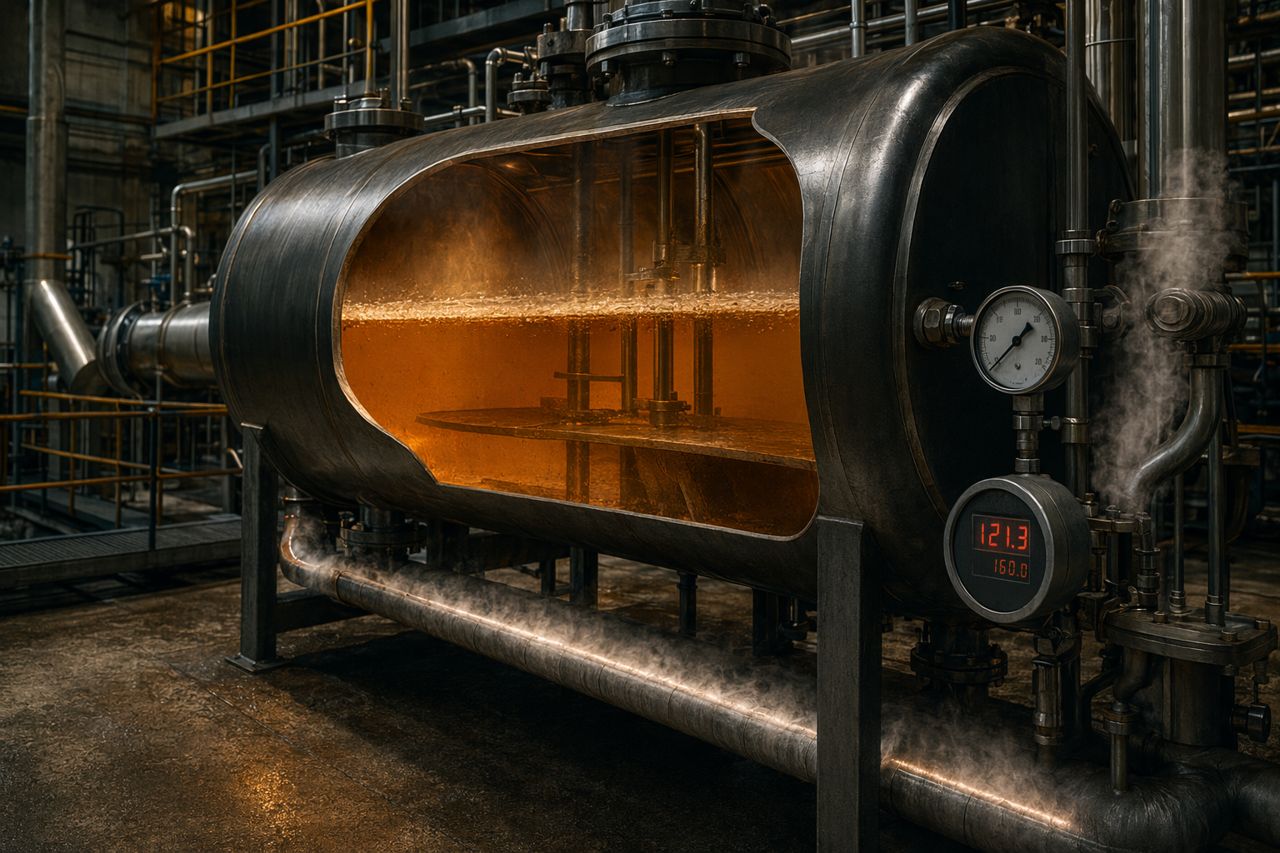
- Hydrolysis tank mixing and hold pattern
- Liquor viscosity and transfer pressure
- Decanter feed stability
- Fat clarity and water carryover
- Solids texture and press behavior
- Cleaning frequency around tanks, lines, and separation equipment
When these indicators drift together, odor is rarely just an exhaust problem.
Residence time: enough conversion without tying up capacity
Residence time is one of the hardest levers in rendering hydrolysis. Too short, and protein breakdown is incomplete. Too long, and the plant ties up tank volume, increases exposure to secondary degradation, and may create a liquor that is harder to separate.
A well-selected enzyme system helps plants achieve the desired hydrolysis profile inside the available hold window. That matters because rendering plants are not lab reactors. They run variable raw material, variable fat content, variable bone and connective tissue load, and real-world production schedules.
The control objective
The goal is not maximum breakdown at any cost. The goal is controlled breakdown that supports:
- Stable pumpability
- Predictable viscosity reduction
- Clean decanter behavior
- Better protein liquor recovery
- Lower rework and recycle loops
- Reduced load on downstream evaporation or drying
- More consistent finished ingredient quality
A plant-floor-ready enzyme program should be built around the available equipment, not around an idealized process that requires a full rebuild.
Viscosity control and throughput protection
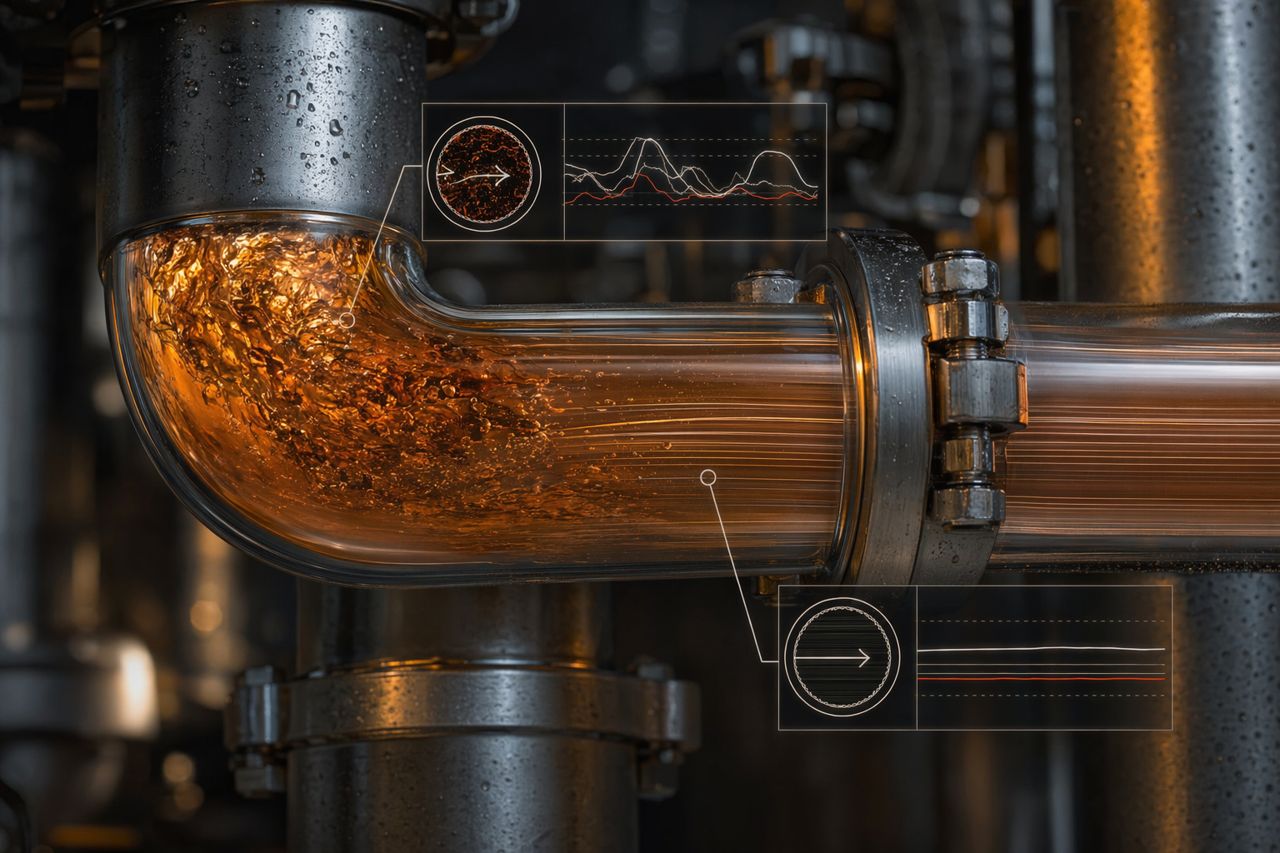
Viscosity is one of the clearest links between hydrolysis chemistry and daily throughput. Thick or unstable liquor increases transfer resistance, slows tank turns, loads pumps, and can starve or surge separation equipment.
When hydrolysis is controlled, protein structures open in a more predictable way. The process stream can move with less drag, operators can maintain steadier feed, and separation equipment receives a more consistent load.
That does not mean every stream should be driven to the lowest possible viscosity. Over-hydrolysis can create fines, emulsification, or separation problems. The right target depends on whether the plant is prioritizing protein liquor recovery, fat separation, digestibility profile, dryer load, or a specific finished ingredient specification.
Rendara works with rendering teams to align enzyme selection with the actual process target: pumpable, separable, recoverable material.
Separation is where poor hydrolysis becomes expensive
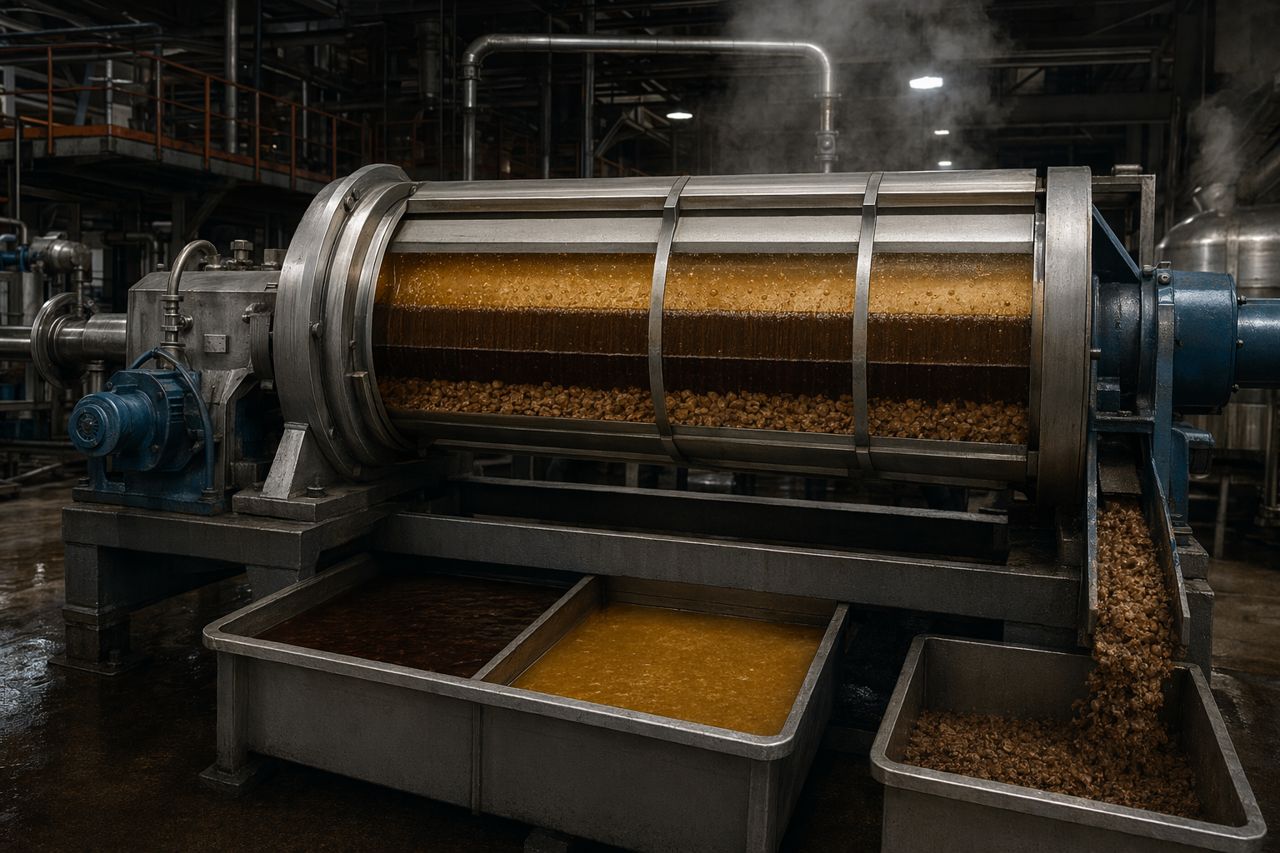
Many rendering plants judge hydrolysis success at the decanter, tricanter, centrifuge, press, or fat-polishing stage. If enzymatic treatment creates a liquor that separates cleanly, the plant sees the value quickly. If it creates stable emulsions or inconsistent solids, operators lose confidence fast.
A controlled enzyme approach should support separation by improving the way protein and connective tissue break down without pushing the stream into excessive fines or persistent emulsion.
What clean separation can improve
Better separation behavior can contribute to:
- More recoverable fat value
- Less fat loss into solids or water phase
- More consistent protein fraction
- Lower wastewater loading from avoidable carryover
- Reduced centrifuge instability
- Less operator intervention during feed changes
- Fewer slowdowns from plugged screens, lines, or nozzles
For a rendering plant, separation quality is not a secondary detail. It is where recovered value, uptime, and downstream load meet.
Heat, enzymes, and the practical operating window
Rendering plants run hot. Enzyme programs must be selected for the plant’s thermal reality, including where dosing occurs, how fast the stream heats, how long it holds, and when enzyme activity is intentionally reduced by process temperature.
The right design considers:
- Feedstock temperature before treatment
- Heat-up profile into the cooker or hydrolysis tank
- Mixing intensity and tank geometry
- Fat content and water availability
- pH range created by the raw material and process chemistry
- Time between dosing and separation
- Sanitation and cleaning routines
A strong enzyme supplier does not hand over a generic product and hope the plant adjusts. The supplier helps define the operating window so production, maintenance, and quality teams know what to expect.
Where enzymes can fit in a rendering plant
Each plant has its own layout, but enzyme treatment is commonly evaluated around these points:
Before thermal treatment
Pre-treatment can help begin breakdown before full cook, but it requires good control over time, temperature, and microbial risk. It is useful only when the plant can manage the window tightly.
During controlled hydrolysis
A dedicated hydrolysis step gives the plant the best opportunity to manage conversion, viscosity, and separation behavior. This is often where enzyme selection has the clearest operational impact.
After coarse separation
Some plants evaluate enzyme treatment on a protein-rich stream after initial fat or solids removal. This can be useful when the goal is a more specific hydrolysate profile or improved handling of a targeted fraction.
In side-stream recovery
Enzymes can also support recovery from difficult protein-bearing side streams, provided the economics justify the added step and the treated stream has a clear destination.
Common mistakes when specifying rendering hydrolysis enzymes
Chasing maximum hydrolysis instead of controlled hydrolysis
More breakdown is not always better. Rendering plants need the right breakdown profile for separation, drying, finished product quality, and plant speed.
Ignoring raw material variability
Poultry, pork, beef, mixed species, blood-bearing material, offal, bone, feathers, and connective tissue all behave differently. Enzyme selection should reflect the real feedstock range.
Treating odor as separate from process flow
Air treatment is necessary, but odor load is often amplified by residence time, poor mixing, unstable heating, and uncontrolled degradation.
Overlooking cleaning and deposit formation
If enzymatic hydrolysis changes solids behavior, it may also change buildup patterns. The program should be assessed against uptime and cleaning frequency, not just conversion.
Dosing without a decision framework
Operators need practical setpoints, adjustment logic, and clear signs of under-treatment or over-treatment. Without that, enzyme use becomes another variable instead of a control lever.
What Rendara focuses on
Rendara supports rendering plants that want enzyme hydrolysis to behave like an industrial process tool, not a trial-and-error additive.
Our focus areas include:
- Protein hydrolysis control for animal byproduct streams
- Viscosity reduction without losing separation discipline
- Fat-water-solids separation support
- Odor-load reduction tied to process stability
- Throughput protection in existing equipment
- Yield recovery from protein-rich fractions
- Practical implementation with plant operators and technical teams
We speak in the same terms your line runs on: hold time, thermal profile, tank turns, decanter load, fat recovery, solids handling, vapor load, cleanout frequency, and finished ingredient consistency.
Questions to ask before changing the enzyme program
Before requesting a quote or plant review, gather the details that affect enzyme fit:
- What raw material mix is processed during normal, peak, and difficult runs?
- Where is odor load highest: receiving, grinding, cooking, hydrolysis, separation, drying, or wastewater?
- Which stream is the main target: whole byproduct slurry, protein liquor, separated solids, side stream, or finished hydrolysate?
- Is the plant trying to reduce residence time, improve yield, lower viscosity, improve separation, or stabilize quality?
- What equipment limits throughput today?
- Where could dosing and mixing occur without creating operator risk or maintenance issues?
- What downstream specification must be protected?
Clear answers help avoid generic recommendations and move faster toward a plant-ready enzyme approach.
The bottom line
Odor, residence time, and process control are connected. In animal byproduct rendering, unstable hydrolysis can show up as odor load, thick liquor, poor separation, lost yield, slower throughput, and more cleaning.
A controlled enzyme program can help the plant move material through the process with better predictability. The value is not theoretical. It shows up when operators can hold a stable window, separation equipment runs cleaner, and recovered protein and fat streams become more consistent.
If your plant is evaluating Rendara as an enzyme supplier for rendering plant hydrolysis, send the process target, feedstock range, and current bottleneck through the on-site request form. We will review the fit and quote the right enzyme approach for your line.
Request a quote