Seven Rendering Hydrolysis KPIs to Track Before Enzyme Trials
A plant-floor guide to the seven KPIs rendering teams should baseline before working with an enzyme supplier for rendering plant hydrolysis.
Request pricing A plant-floor guide to the seven KPIs rendering teams should baseline before working with an enzyme supplier for rendering plant hydrolysis.
Request pricingEnzymatic hydrolysis can improve protein solubilization, viscosity control, separation behavior, and yield recovery in a rendering plant. But the enzyme is not the first variable to define. The first variable is the plant baseline.
Before selecting an enzyme supplier for rendering plant hydrolysis, operations teams should know where the line is losing value today: unstable feedstock, uneven thermal exposure, high liquor drag, poor phase split, odor load, evaporator burden, screen blinding, or cleaning downtime.
The right KPI set turns an enzyme trial from a lab exercise into a controlled production decision.
Rendering hydrolysis starts before the cooker. Species mix, freshness, fat load, moisture, particle size, bone fraction, feathers, hide, blood, and viscera content can shift the way protein breaks down.
Track the inputs that change the hydrolysis load:
Why it matters: enzymes are selective tools, not correction chemicals. A plant handling mixed raw streams needs a hydrolysis strategy built around variability, not a single ideal sample.
Particle size affects heat transfer, enzyme contact, viscosity development, and downstream screen performance. Oversized material can create uneven hydrolysis. Over-grinding can increase fines, load the liquid phase, and make separation less clean.
Useful plant-floor checks include:
Why it matters: better surface access can improve hydrolysis control, but excessive fines can push solids into the liquid stream and reduce clean phase separation.
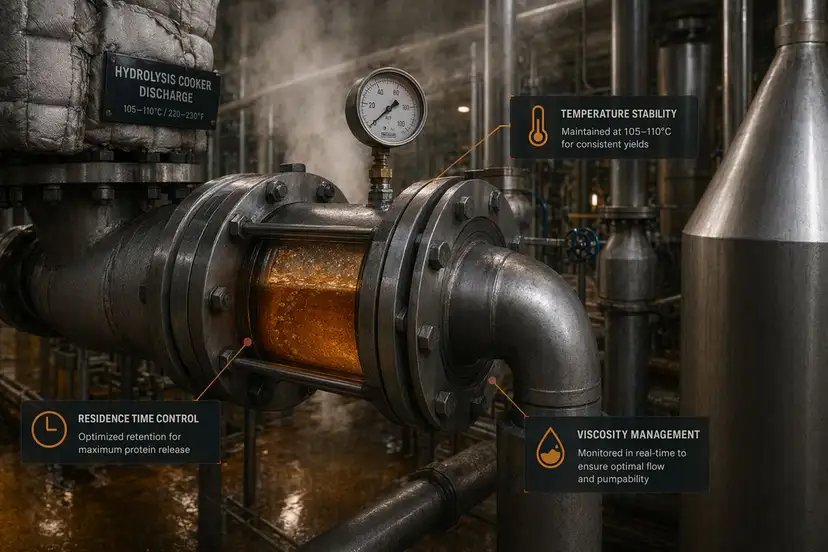
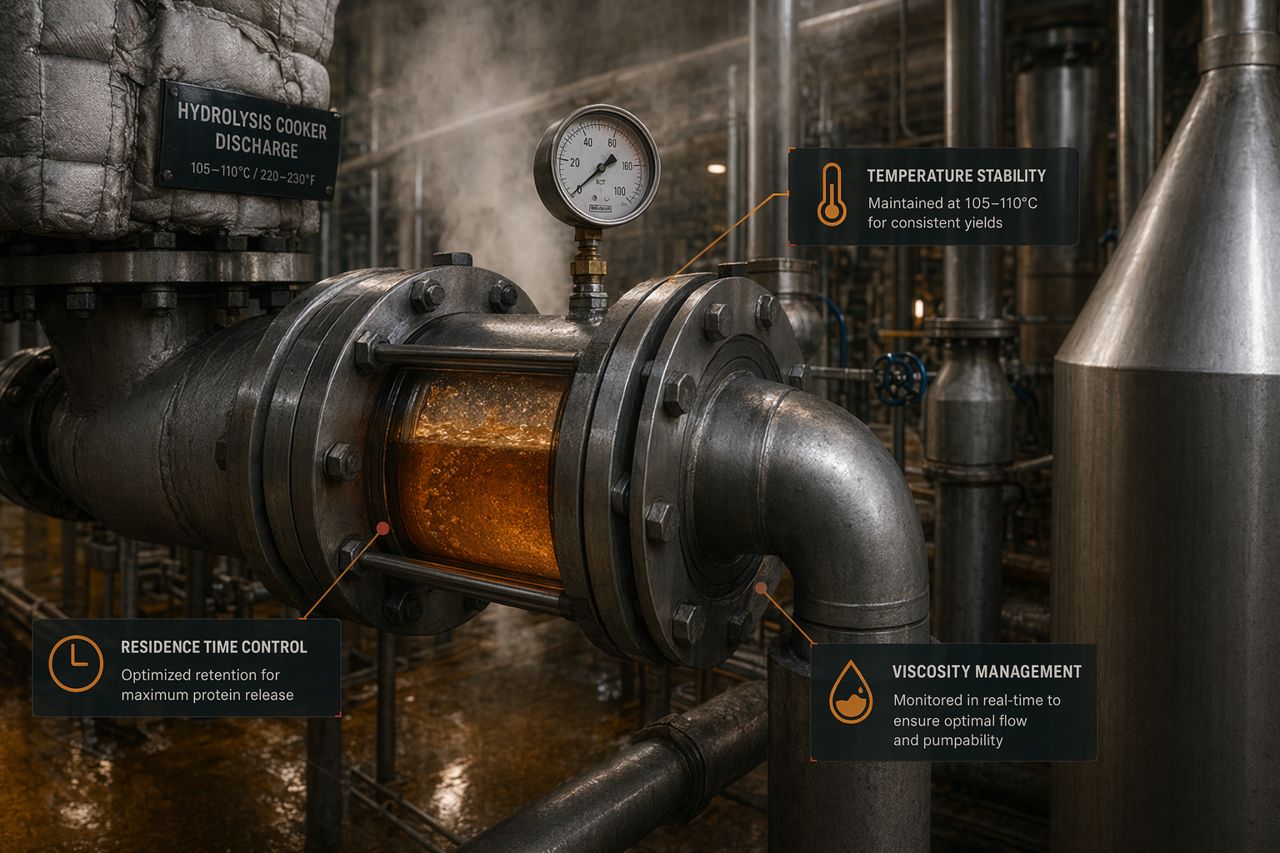
Enzymes operate inside a temperature window. Rendering plants often think in terms of cooker setpoint, but the enzyme sees the actual thermal history: hot spots, cold pockets, transfer delays, steam pulses, and tank wall temperatures.
Baseline the process around:
Why it matters: uncontrolled heat can shorten the useful hydrolysis window. Low or inconsistent heat can slow conversion and create variable liquor quality.
Hydrolysis is not only a chemistry step. It is a flow-control step. If residence time shifts with feed surges, tank level, recirculation rate, or pump availability, the same enzyme program can deliver different results hour to hour.
Track:
Why it matters: stable residence time helps the plant hit a repeatable hydrolysis profile, instead of chasing viscosity and separation problems downstream.
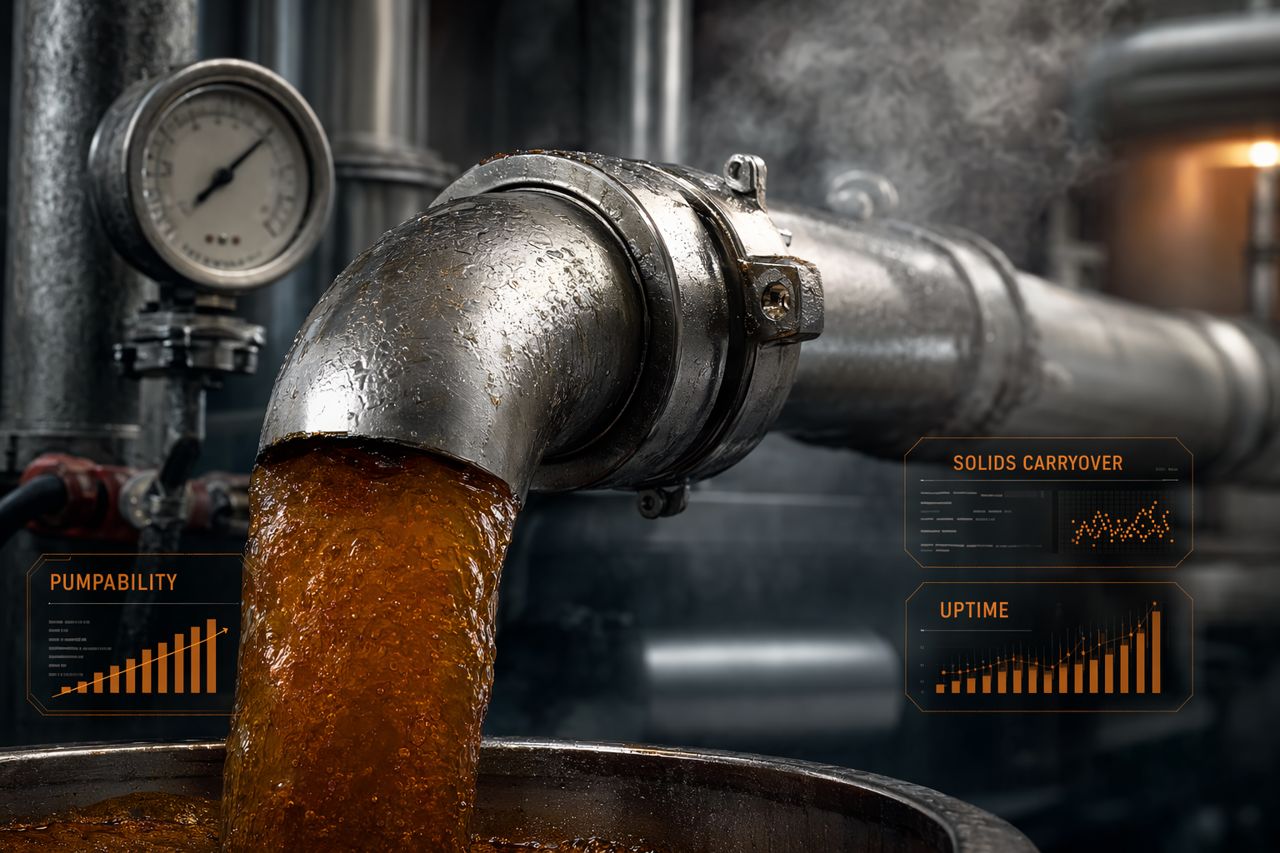
Viscosity is one of the most practical hydrolysis KPIs because it shows up immediately in the plant: pump load, transfer speed, tank turnover, heat exchange, and decanter feed behavior.
Watch for:
Why it matters: controlled viscosity can increase throughput, reduce recirculation time, and make downstream separation more predictable.
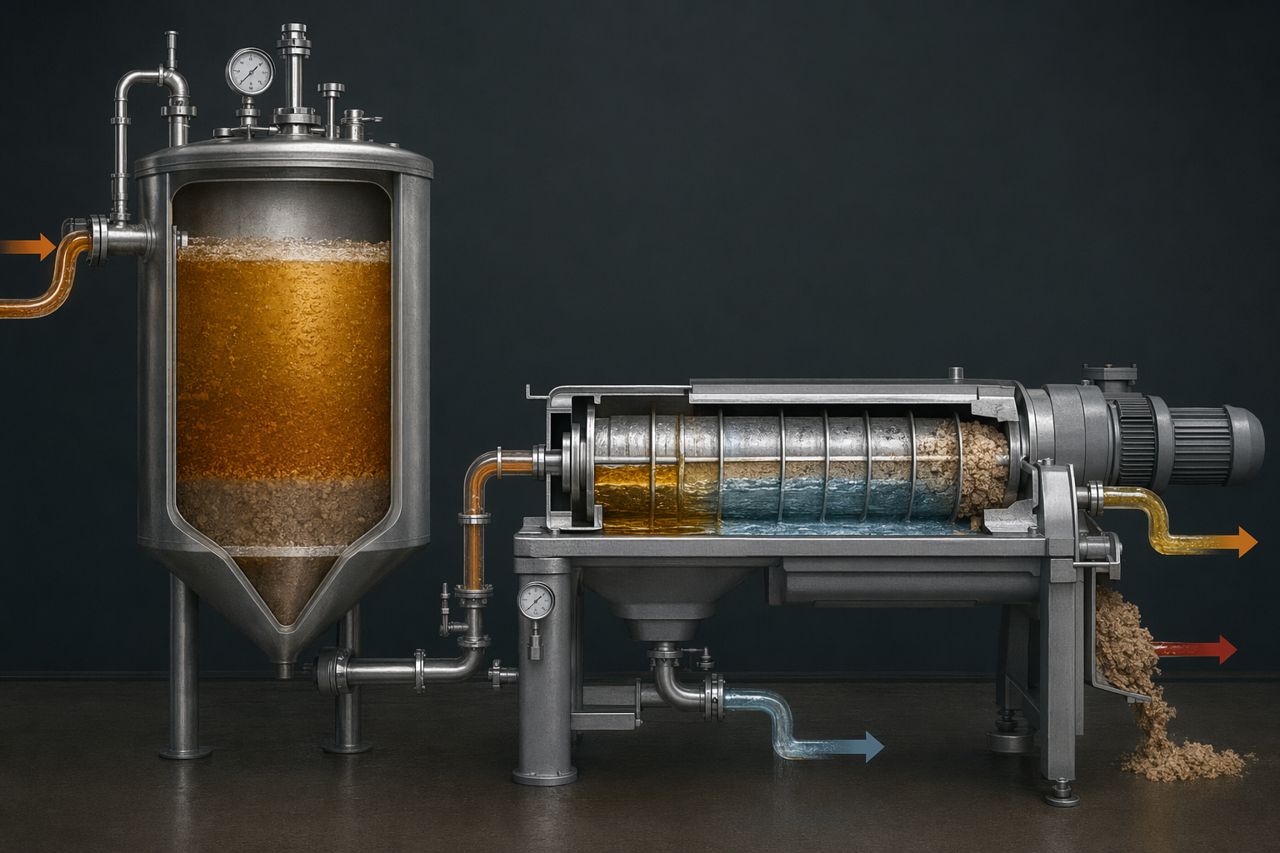
A hydrolysis program should not be judged only by how aggressively it breaks down protein. It should be judged by what happens at the decanter, centrifuge, press, screens, and evaporator.
Baseline separation with practical production indicators:
Why it matters: more breakdown is not always better. The goal is controlled hydrolysis that supports clean separation and profitable recovery.
Odor should be managed as an operating load, not just a complaint. Hydrolysis affects volatile release, condensate behavior, tank residue, and cleaning demand. The KPI should connect odor and fouling to cost and uptime.
Track:
Why it matters: an enzyme program that improves yield but increases cleaning or odor burden may not improve plant economics. The full line has to be measured.
A strong hydrolysis trial brief should define the plant target before enzyme selection begins.
Include:
This gives the enzyme supplier a production problem to solve, not a sample to guess from.
Rendara supports rendering plants with enzyme selection for controlled hydrolysis, protein recovery, viscosity reduction, and downstream separation performance. We look at the whole rendering line: grinders, cookers, hydrolysis tanks, transfer loops, decanters, centrifuges, evaporators, and cleaning patterns.
The goal is not maximum breakdown. The goal is the right breakdown, in the right process window, with measurable plant value.
If your team is evaluating enzymatic hydrolysis for a rendering line, send us your process target, feedstock type, addition point, and the KPIs you want to improve.
Tell us your application and volume — we reply with pricing and lead time.