Offal Slurry Pumpability: Practical Causes of Thick, Variable or Hard-to-Move Streams
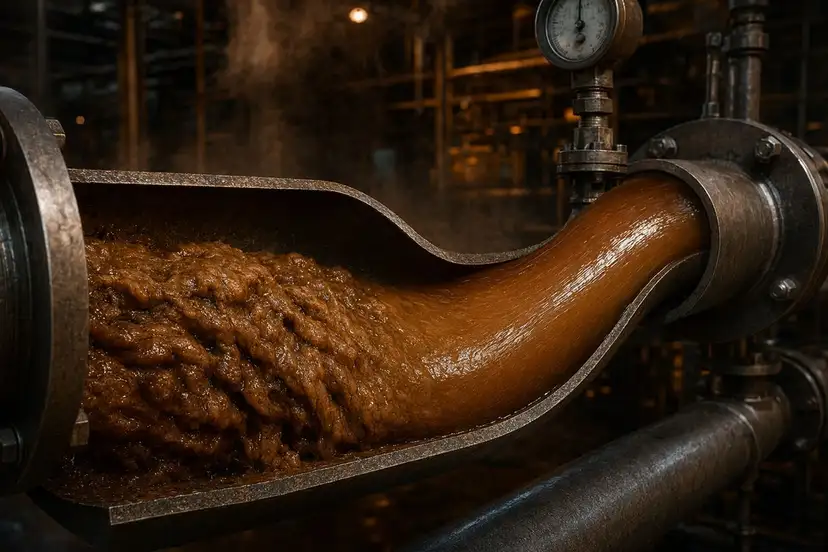
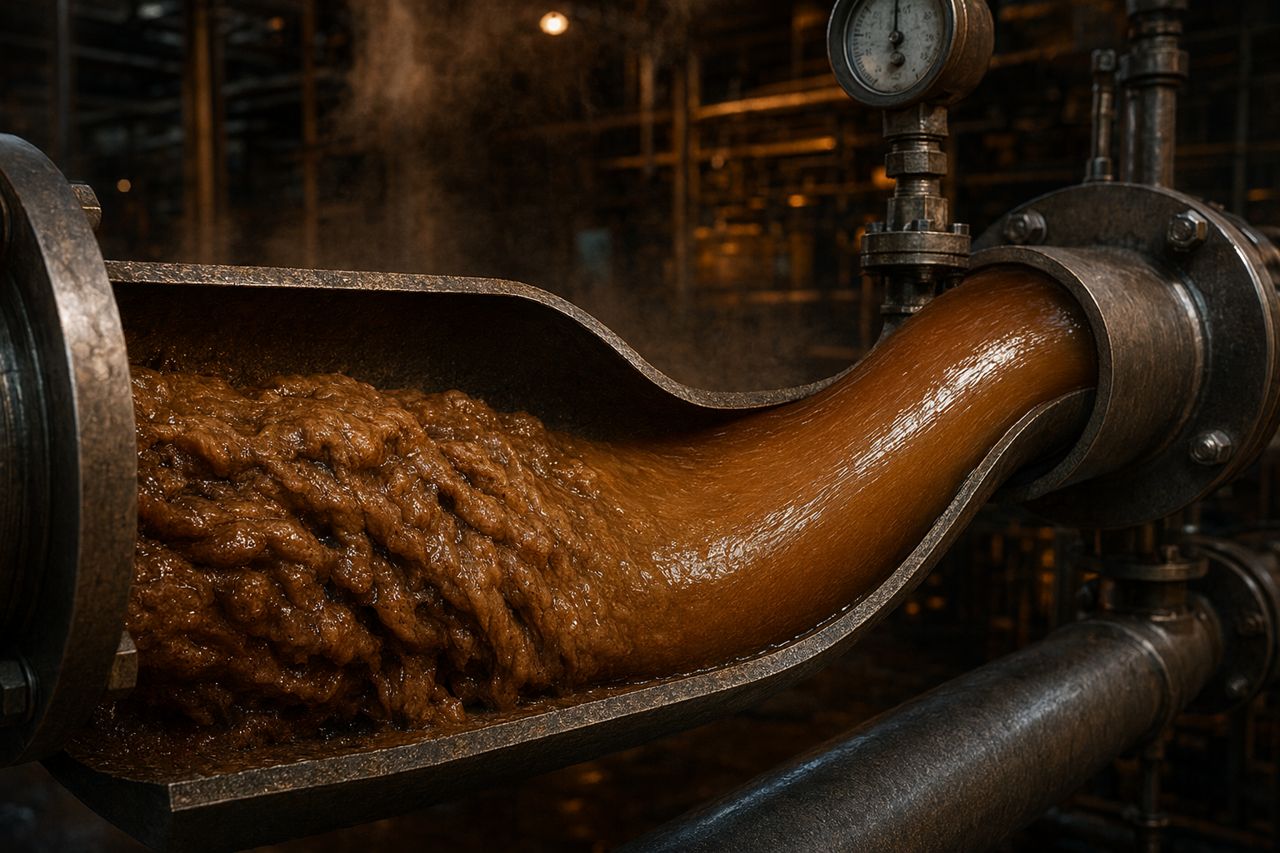
In an animal rendering plant, pumpability is not a minor handling issue. A thick, surging, or ropey offal slurry can slow grinders, load cookers unevenly, starve hydrolysis tanks, overload pumps, and disturb decanter separation. Once viscosity starts moving around, the whole line feels it: higher amperage, hotter bearings, more operator intervention, more odor release at transfer points, and less predictable recovery of fat, water, and solids.
Rendara supplies enzyme solutions for rendering plant hydrolysis where the operating target is not laboratory perfection. The target is a controlled slurry that moves, reacts, separates, and cleans down with fewer surprises.
If your plant is evaluating an enzyme supplier for rendering plant hydrolysis, pumpability should be one of the first process checkpoints.
Why Offal Slurry Becomes Hard to Move
Offal slurry is not a uniform fluid. It is a changing mix of protein, fat, connective tissue, water, bone fines, blood, viscera, feathers or hair carryover, and thermal history. Two loads can look similar at receiving and behave very differently once ground, heated, and pumped.
The most common pumpability problems come from a combination of raw material variation and process imbalance.
1. Particle size is too inconsistent
Oversized tissue pieces, tendon, hide fragments, or connective material can form drag points in piping and elbows. Fine particles may move, but larger pieces can bridge at pump inlets, accumulate at reducers, and cause pressure swings.
What plant teams often notice:
- Pump feed looks wet, but flow still surges
- Grinder discharge alternates between paste and chunks
- Elbows and valves foul faster than expected
- Hydrolysis tank loading becomes uneven
Enzymatic hydrolysis cannot replace correct size reduction, but it can help reduce the resistance created by protein-rich material when the upstream grind is reasonably controlled.
2. Protein structure is still too intact
Raw offal contains dense protein networks and collagen-rich connective tissue. When these structures remain intact, they hold water, thicken the slurry, and increase drag through transfer lines.
Under controlled conditions, proteolytic enzyme systems can help break down protein structures into more mobile fractions. This can improve slurry movement without relying only on aggressive thermal treatment.
The practical plant value is straightforward: lower handling resistance, steadier feed, and fewer flow interruptions before separation.
3. Heat history is working against flow
Temperature can help reduce fat viscosity and accelerate hydrolysis, but poor heat control can make the stream harder to manage. Local overheating can set protein, build cooked deposits, and create sticky material that drags through the system. Underheating can leave fat and protein structures too firm for steady pumping.
Watch for:
- Sticky buildup after hot zones
- Thick discharge after temperature swings
- Viscosity changes during start-up and shutdown
- Poor separation after aggressive cook conditions
The goal is not simply more heat. The goal is a thermal window that supports enzyme performance, flow control, and downstream separation.
4. Fat distribution is unstable
Free fat, emulsified fat, and fat trapped inside tissue do not behave the same way. When fat is poorly released or heavily emulsified, the slurry can become unstable. It may look pumpable in a tank but shear thickens through transfer, foams under agitation, or separates inconsistently at the decanter.
A controlled hydrolysis strategy can support cleaner tissue breakdown and better phase behavior. That matters when the plant wants more predictable fat recovery and less operator adjustment at separation.
5. Solids loading is too high for the pump and line design
Sometimes the chemistry is not the only issue. A slurry can be too dense for the installed pump, suction geometry, line diameter, or transfer distance. Enzymes may improve flow behavior, but they should be applied with the mechanical limits in view.
Useful checks include:
- Pump inlet flooding and suction stability
- Dead legs and sharp transitions
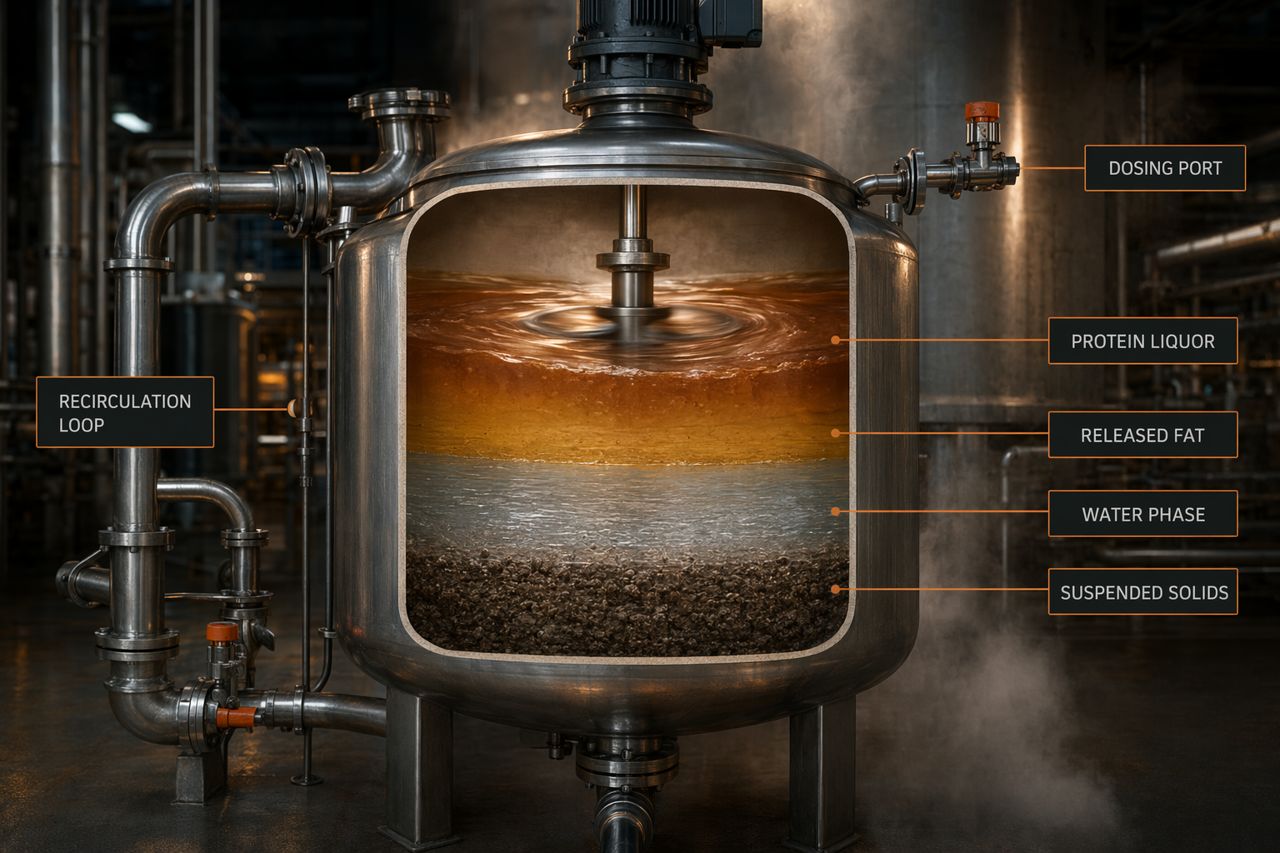
- Agitation coverage in the hydrolysis tank
- Recirculation pattern and dead zones
- Transfer timing between batches or process stages
Rendara looks at enzyme fit as part of the operating system, not as a drop-in label claim.
Pumpability Problems Usually Show Up as Plant Symptoms
Thick or variable offal slurry rarely appears as one isolated problem. It usually shows up as a chain of operating symptoms.
Common indicators
- Pump amperage climbs during certain raw material lots
- Transfer time varies from batch to batch
- Hydrolysis tanks show uneven reaction or dead zones
- Cookers load inconsistently
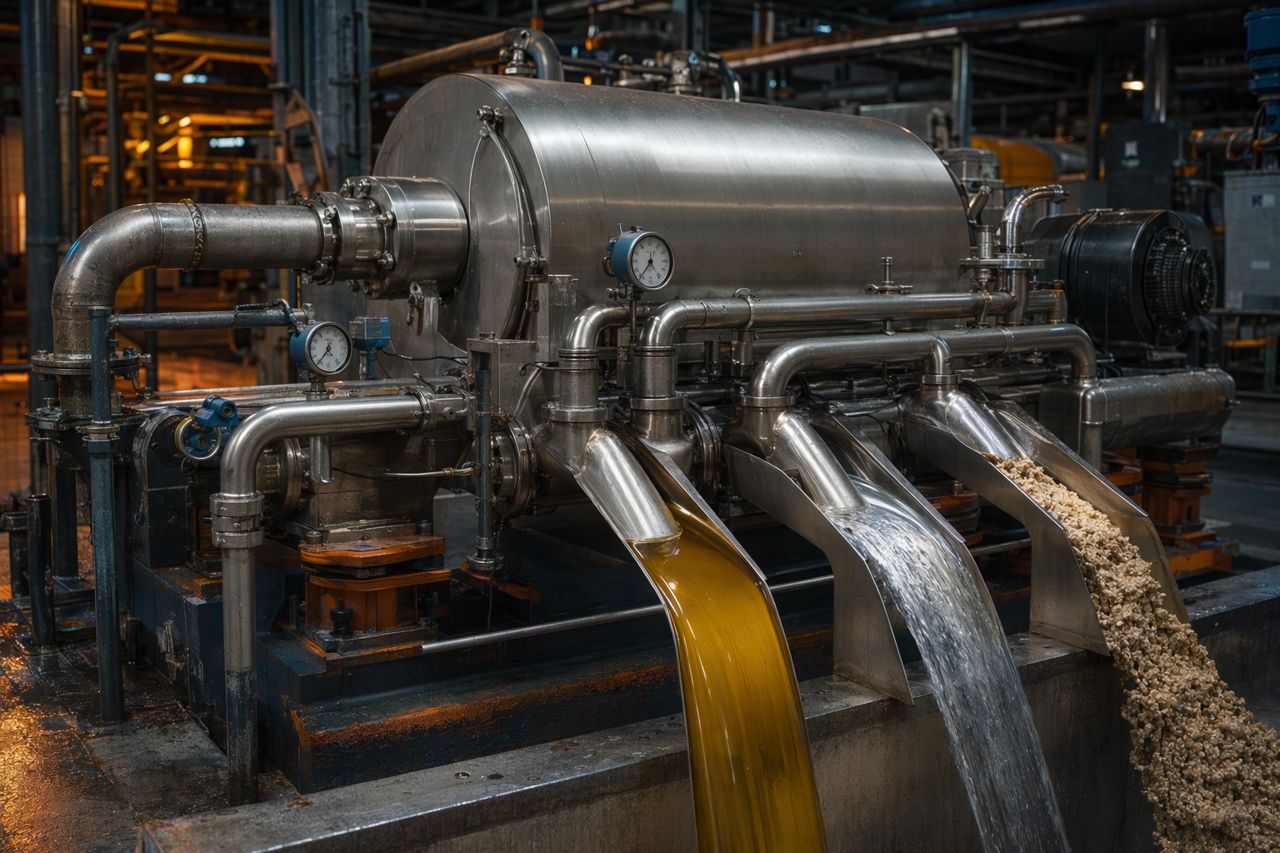
- Decanter feed surges or separates poorly
- Fat recovery fluctuates with no clear mechanical fault
- Odor load increases near open transfer points
- CIP takes longer because deposits are more tenacious
- Operators add water just to get material moving
Adding water can restore short-term flow, but it also dilutes process intensity, increases heating demand, adds evaporative load, and can reduce downstream efficiency. For many plants, the better target is not thinner by dilution. It is thinner by controlled breakdown.
Where Enzymes Fit in Rendering Hydrolysis
Enzyme treatment is most useful when the plant has a defined hydrolysis point and enough control over mixing, temperature, time, and pH to make the reaction repeatable. In offal slurry handling, the commercial purpose is typically one or more of the following:
- Improve slurry mobility before transfer or separation
- Reduce viscosity variation between raw material lots
- Release trapped liquid and fat from protein tissue
- Support cleaner phase separation
- Reduce recirculation stress and pump intervention
- Improve yield recovery from difficult material streams
- Reduce deposit formation caused by sticky protein fractions
Rendara enzyme solutions are selected around process behavior: what the slurry contains, where it thickens, where the plant can dose, and what the downstream separator needs to see.
Practical Causes to Audit Before Changing Chemistry
Before changing an enzyme program, it helps to map where the slurry first becomes hard to move.
Receiving and raw material mix
A higher share of connective tissue, skin, viscera, feathers, hair, blood, or bone fines can shift viscosity and handling behavior. If pumpability changes by supplier, species mix, shift, or storage time, raw material variability is part of the control problem.
Grinding
Poor knife condition, screen wear, or inconsistent feed rate can create a broad particle distribution. Large tissue pieces increase mechanical drag; excessive fines can create paste-like behavior.
Slurry moisture and dilution practice
Water addition may be necessary in some systems, but uncontrolled dilution can hide the root cause and push cost downstream. Track when operators add water, how much they add, and what problem they are trying to correct.
Mixing and residence time
Enzymes need access to substrate. Dead zones, floating fat layers, and poor turnover can create uneven hydrolysis. One section of the tank may be over-treated while another remains thick.
Thermal control
Temperature should support both material mobility and controlled enzymatic action. Repeated temperature overshoot can create cooked protein deposits. Low temperature can leave tissue structures resistant to breakdown.
Separation response
A slurry that pumps well but separates poorly is not solved. The right hydrolysis target must support the decanter or press, not just the transfer pump.
What a Controlled Hydrolysis Program Should Deliver
A rendering plant enzyme program should be judged by operating outcomes, not by a technical label alone.
Plant-floor performance targets
- More consistent transfer behavior
- Lower frequency of pump stalls and suction problems
- Smoother hydrolysis tank turnover
- More stable feed to decanters or presses
- Cleaner fat-water-solids separation
- Less operator correction with water or manual intervention
- Better recovery from high-connective-tissue streams
- Faster return to steady state after raw material variation
The best result is not always the lowest viscosity possible. Over-hydrolysis can create its own problems, including difficult separation, foaming, or excessive soluble load. The target is controlled breakdown matched to the plant’s equipment and recovery goals.
How Rendara Approaches Offal Slurry Pumpability
Rendara supports rendering plants with enzyme solutions built around real operating constraints: grinders, cookers, hydrolysis tanks, transfer pumps, heat exchangers, decanters, and cleaning windows.
A typical technical discussion focuses on:
- Raw material profile and variability
- Current thickening point in the process
- Available dosing location
- Temperature and residence window
- Mixing intensity and tank geometry
- Separation target and recovery priorities
- Current pain points: viscosity, odor load, yield loss, deposits, or downtime
From there, Rendara can recommend an enzyme approach aligned with plant throughput and separation performance.
When to Request a Quote
Request a quote when pumpability is limiting throughput, increasing transfer time, forcing excess dilution, disturbing separation, or creating repeat downtime around pumps and tanks.
Use the on-site form and include the material stream, current process stage, main symptom, temperature window, and separation equipment. Rendara will review the application and respond with an enzyme supply recommendation for your rendering hydrolysis process.
Request a quote